
Why do most vendor booths look the same?
Most vendors use the same white 10x10 canopy over a folding table with a plain cloth, so nothing tells shoppers who's who.
Shoppers scan a row of booths in a few seconds. If nothing on yours says who you are or what you sell, you're one more white tent, and people walk past. Your canopy and your table are the largest things in your space, and they come with you to every event, so they're the place to brand.
Getting the basics in place first? Our vendor booth setup checklist covers what to pack and the order to set up, and what tables to bring covers sizes and height. To draw people in once you're set up, see booth giveaways that work.
What does a custom canopy do for a vendor booth?
A custom canopy gets your booth noticed from a distance and tells people who you are before they reach you.
- The peaks are seen from far away. Your logo or name on the roof shows over the crowd and from the far end of the row. People use it to find you again and to tell a friend where you were.
- The valance speaks at eye level. That's the strip of fabric around the edge of the roof. It's the best spot for your business name, what you do and one way to reach you, such as a phone number or website.
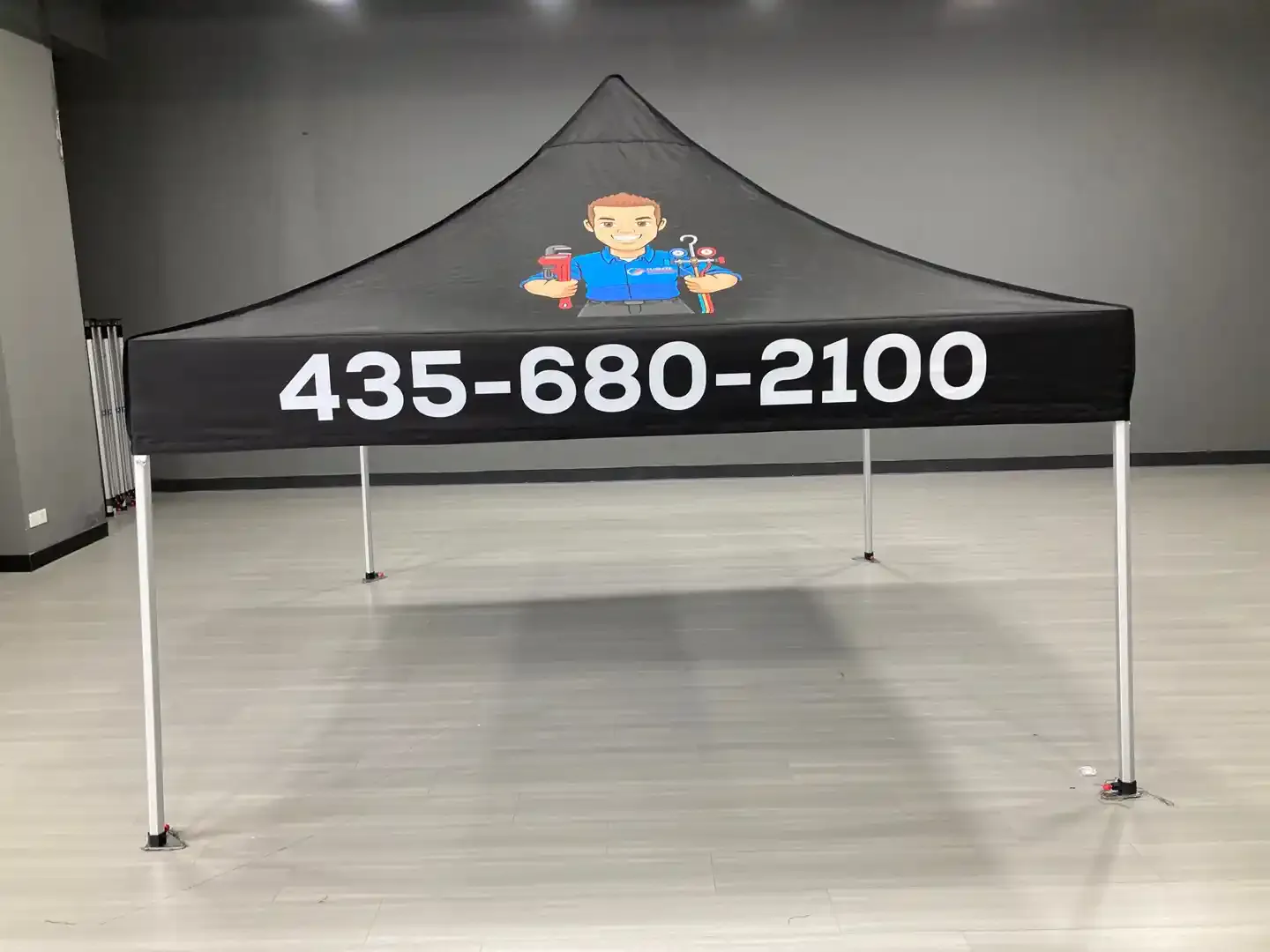
Printed canopies are made with dye sublimation, so the ink goes into the fabric instead of sitting on top of it, and it won't crack or peel. A good one has a polyester top that's waterproof, UV resistant and flame retardant, on an aluminum frame that one person can set up for a 10x10. You can add printed side walls or a back wall for your menu, services or a large photo.
What does a custom tablecloth do?
A printed tablecloth puts your name and what you do at eye level, on the front table, where shoppers decide whether to stop.
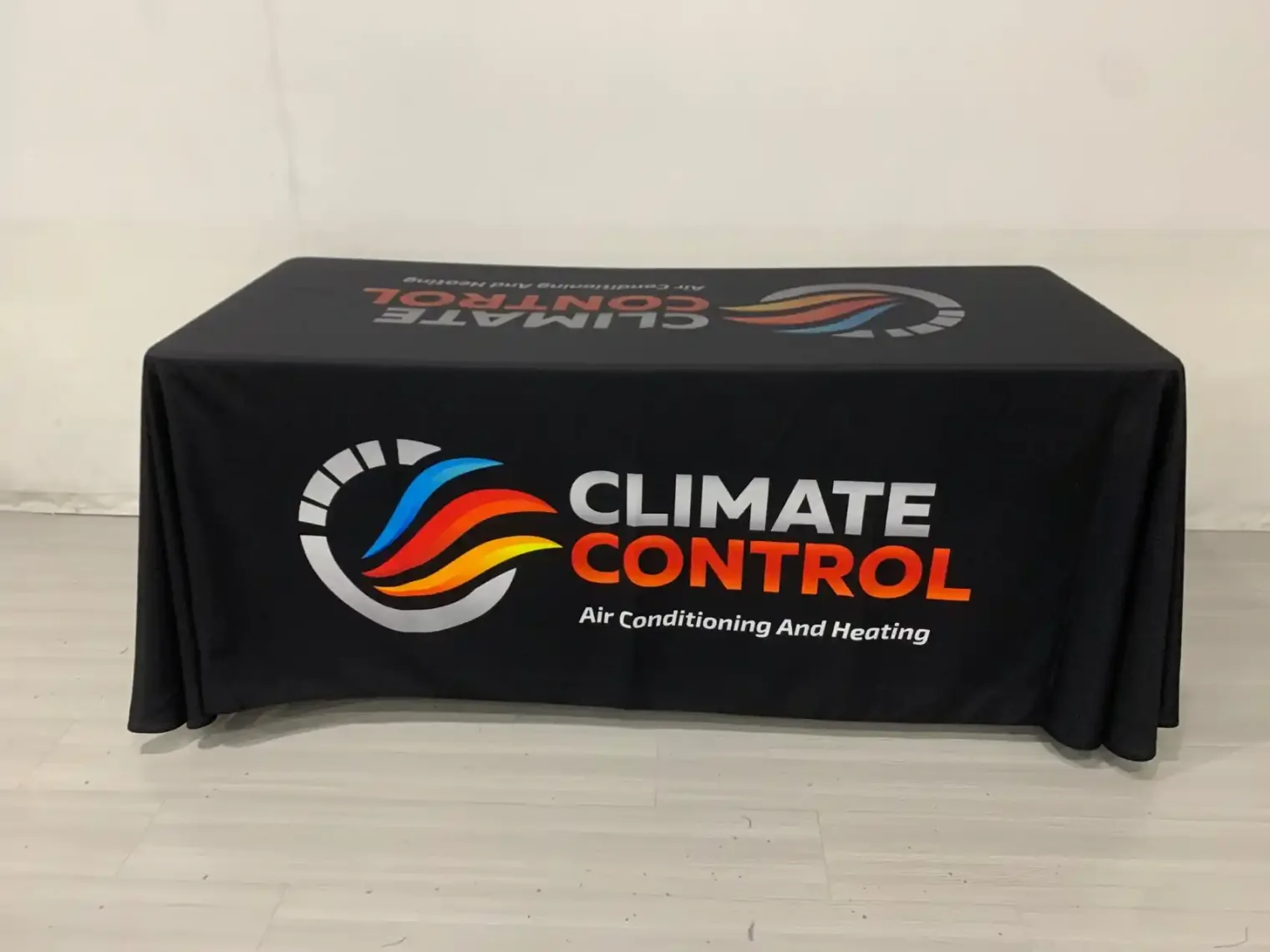
- Size: the 6-foot cover, for a 72 by 30 inch table, is the standard for markets. Trade shows usually use 8-foot tables.
- Style: a full-drape cover with an open back reaches the floor on three sides, so you can keep stock and bags under the table out of sight. A fitted cover closes all four sides and looks more polished. A stretch cover hugs the table and holds up best in wind.
- Care: polyester covers are machine washable and fold flat between events.
Why is a custom canopy worth more to a small business than to a crafter?
A small business is at the event to be remembered and hired later, while a crafter is there to sell what's on the table. Printed gear does the remembering; a crafter's product does the selling.
- A business needs shoppers to remember it. An HVAC company, a realtor, an insurance agent, a roofer, a gym or a med spa usually isn't selling anything off the table. It wants a call next month when the air conditioner quits. A printed canopy and tablecloth put the name and number in front of everyone who passes, including people who never stop.
- A crafter's product draws people in. Shoppers stop at a handmade booth because they can see and touch the candles, the jewelry or the pottery. For a crafter, money spent on lighting, shelves, display height and more stock often brings in more sales than a printed roof.
- The math is different. A custom 10x10 canopy from Team Tents starts at $850. The booth fees we've collected run from $10 to $475 per event or market day (see how much a vendor booth costs). If a crafter keeps half of each sale, an $850 canopy takes $1,700 in sales to pay for itself, which can be many weekends at a small market. For a contractor, one new customer from one event can cover it.
- A business uses it at more kinds of events. The same canopy and tablecloth work at farmers markets, festivals, chamber events, home shows, job fairs, school nights and races the business sponsors. Each time people see the same colors and name, it adds up. For a business, branded booth gear is usually marketing spend; ask your accountant how to handle it.
- It looks established. A shopper deciding who to let into their house or trust with a big job reads a printed booth as a business that plans to stay. A white tent with a paper sign says the opposite, fairly or not.
Should a crafter buy a custom canopy?
Usually not first. A crafter should start with a printed tablecloth or a banner, which cost less, travel easily and still put the shop name in front of shoppers. What sits on the table matters as much: here is how to set up a jewellery booth with busts, tiers and cards.
Move up to a printed canopy when:
- You do events most weekends, so the cost is spread over many shows.
- You have a brand name shoppers look for, at markets or online.
- You sell at large festivals where people need to find you in a crowd.
Before you print, read the rules for the shows you do. Some events set rules on tent color or signage, and organizers usually list them on the vendor application.
What makes a good custom canopy and tablecloth design?
A big name, a few words about what you do, one way to reach you and strong contrast, in the same colors on the canopy and the tablecloth.
- Make the name big. If it can't be read from 50 feet away, it's too small.
- Say what you do in a few words. "Air conditioning and heating" or "Handmade soy candles" tells a shopper more than a logo alone.
- Give one way to reach you. Pick a phone number or a website, not both plus three social handles.
- Use strong contrast. Light letters on a dark canopy, or dark on light, read best in bright sun.
- Match the tent and the tablecloth. The same colors on both make your booth look like one brand in person and in photos.